

The right tennis bag size starts with what you bring to the court: your racquets, the kit you use during play, and the belongings that come along for the rest of the day. Compare racquet capacity, overall dimensions and compartment layout together, rather than choosing by litres alone.
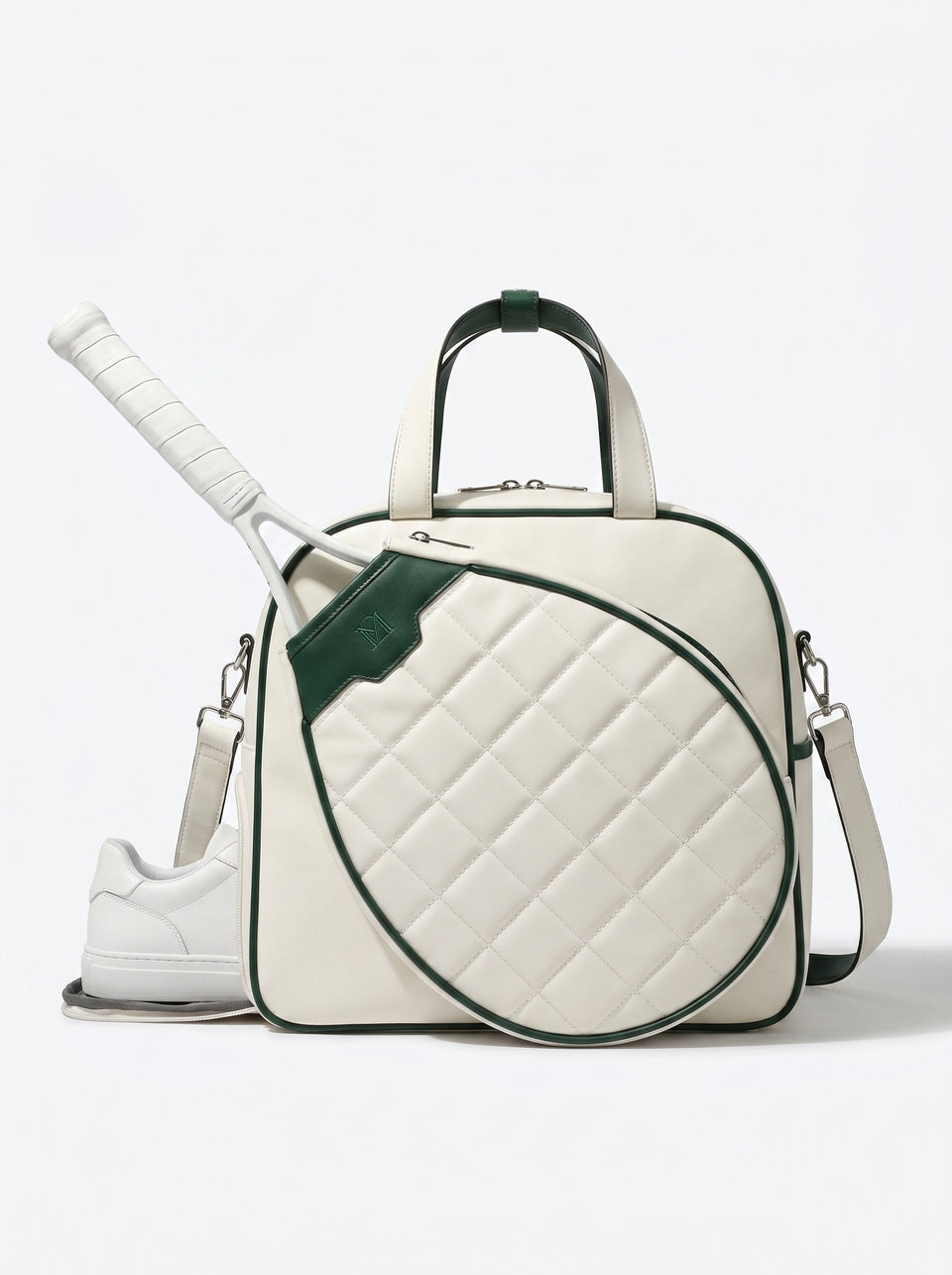
For a considered two-racquet option, the Maison Muze Westmount Tennis Weekender combines a 25-litre tote format with dedicated shoe storage and distinct pockets for smaller essentials. Here is how to decide whether that combination suits your routine.
Start with three parts of your packing list
Think about a usual tennis day before planning for the occasional longest one. Group your belongings into three parts:
- Racquets: count what you actually carry, including a spare if it travels with you.
- Court kit: list your shoes, balls, water, towel and any change of clothes you normally bring.
- Day essentials: add the things that accompany your journey, such as keys, a phone and a wallet.
Then mark which items need their own space and which you want to reach quickly. This turns a general question about bag size into a useful comparison of layouts. A bag that gives footwear, racquets and small valuables separate places can make your routine easier to organise.
Before your first lessons: ask the coach whether a racquet is provided and what footwear the venue requires. Build your list around what you will actually carry to those sessions. Your playing level alone does not set the capacity you need. Our court-day essentials checklist helps with lesson preparation; use the size and layout checks below to choose the bag.
Racquet count and litres describe different things
A racquet-count label describes the bag's intended racquet capacity. Litres describe its stated volume. Look at both, then check where your racquets sit and how the other compartments are arranged.
Two bags with the same litre figure can have different shapes, openings and pocket layouts. Equally, a bag labelled for several racquets may be used with some of that space devoted to other kit. Choose around your own combination of racquets and belongings, rather than treating the largest number as the best fit.
For a wider explanation of bag formats and racquet-count labels, Tennis Warehouse's bag selection guide provides useful context. For your final decision, return to the specifications and layout of the bag you are considering.
A 25-litre, two-racquet example: the Westmount
The Westmount is designed around two racquets, a dedicated side shoe compartment and a tote silhouette that moves naturally from the court to the rest of your day. Its published measurements give you a concrete starting point for comparison:
| Detail | Specification |
|---|---|
| Racquet capacity | Two racquets |
| Stated capacity | 25 litres |
| Overall dimensions | 40 × 16 × 39 cm, length × depth × height |
| Empty weight | 0.75 kg |
| Carrying options | Top handles; adjustable, detachable crossbody strap |
Use the dimensions to compare its outline with a bag you already enjoy carrying or the space where you plan to keep it. Consider the depth as well as the height and width: they describe different parts of the profile.
Organisation completes the picture. Alongside its roomy shoe compartment, the Westmount includes an exterior water and umbrella pocket, a secure back zipper pocket and a thermal-lined interior pocket. Those dedicated places let you plan where your essentials belong. Our shoe-compartment guide takes a closer look at the benefits of keeping footwear separate.
Consider the journey as well as the court
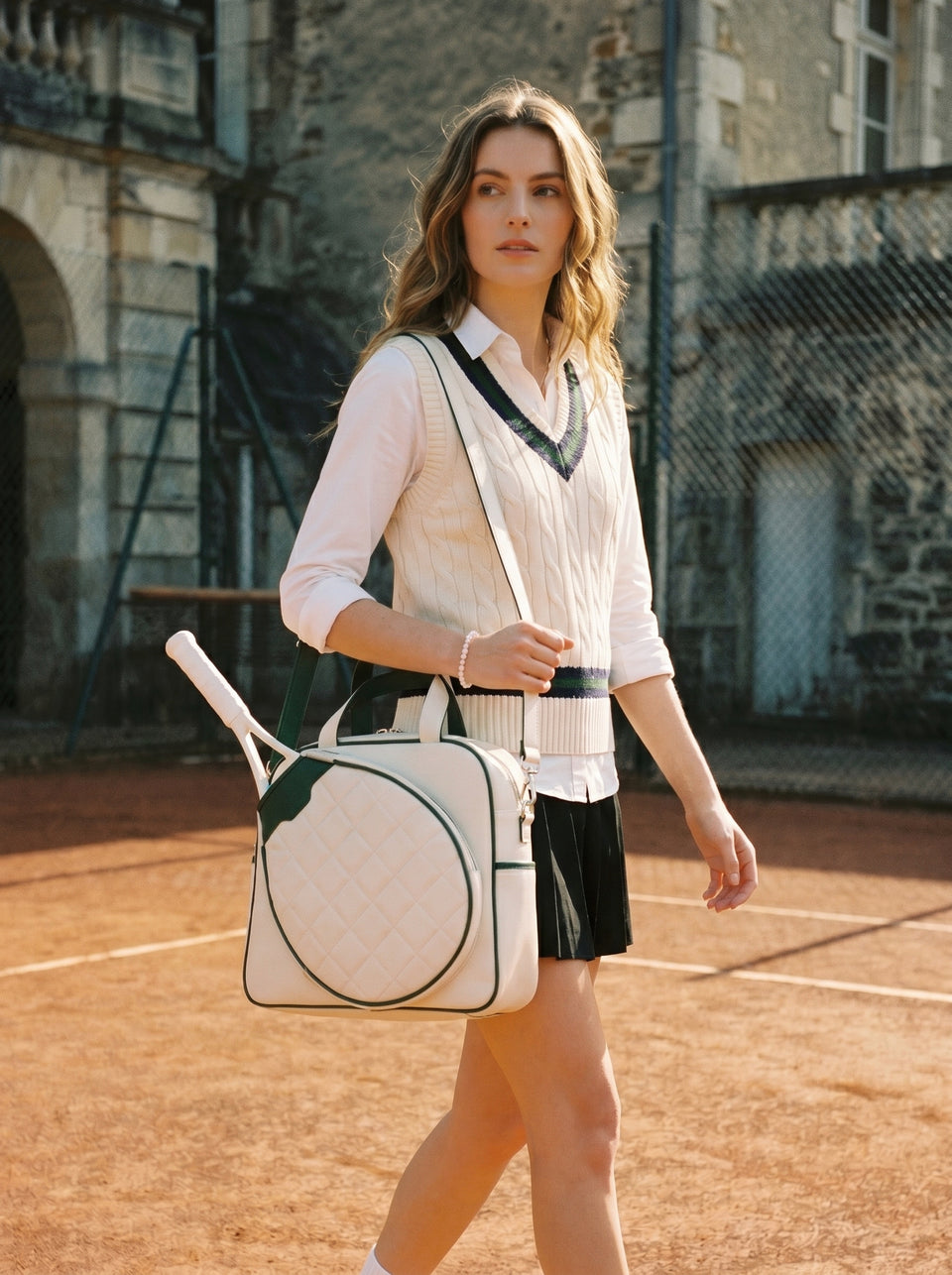
Your bag accompanies the walk to the club, the journey home and whatever you have planned afterwards. Compare the empty weight, how you prefer to carry it and where you will set it down, alongside its capacity.
The Westmount's 0.75 kg empty weight and adjustable, detachable crossbody strap are useful details to include in that comparison. Its understated quilting and quiet branding bring the practical court layout into an everyday tote design.
Your final size check
- Match the racquet count. Choose a bag intended for the number you regularly carry.
- Map your belongings. Decide what goes in the main area, what belongs separately and what needs quick access.
- Compare the outline. Check the published length, depth and height against your journey and storage space.
- Choose your carrying style. Look at the empty weight, handles and strap options together.
If you carry up to two racquets and want a refined tote with dedicated court organisation, the Westmount Tennis Weekender is designed for that brief. Explore the product photographs and full specifications, or ask Maison Muze a packing question to help choose your court-day companion.
A Maison Muze guide. Product specifications checked 1 November 2026.