

How many tennis rackets do you need? Start with the session and your backup plan. One playable racquet can suit a casual hit if you are comfortable with the interruption if it becomes unusable. For competitive play, a playing racquet plus a ready spare is a practical starting point. A first lesson may use loan equipment; confirm that with your coach.
The useful question is not how many slots a bag has. It is: if my racquet is suddenly unavailable, can this session continue?
Cover: an AI-created fictional player and generic racquets, not a customer photograph or equipment test.
Before a first lesson, ask what is available
You do not have to decide on a collection of racquets before learning what you enjoy using. The LTA's beginner guidance notes that coaching sessions can often provide equipment to borrow. Availability belongs to the individual coach or session, so ask before you arrive.
A useful message is: “Is a racquet included, and is another one available if I need to change?” Keep that answer with your lesson details. Borrowing arrangements and owning your own equipment are different decisions.
For regular or competitive play, plan the spare
A broken string or another equipment problem can interrupt a session. Dunlop's equipment guidance recommends at least one spare for competitive players and similar setups when switching between racquets. That is a backup principle, not a rule that every player must carry the same number.
Think about how you play and what you can access. If you frequently need a replacement or have several sessions before equipment can be serviced, discuss the arrangement with your coach or racquet technician. Your own history is more useful than copying the size of a professional player's kit.
Use a three-question backup card
- What is this session? Write “lesson”, “casual hit” or “competition”, then note whether usable loan equipment has been confirmed.
- What would an interruption mean? Decide whether you could pause or finish early, or whether continuing with another racquet is part of your plan.
- What is ready now? Identify the actual replacement you would use. A spare that needs strings or cannot be reached at the venue is not the same as one ready for play.
This card gives the second racquet a clear job. It can be a familiar backup rather than an extra item carried without a reason. If you are changing to a different model, try it before relying on it as your replacement during a match.
Choose the bag after the racquet plan
Once you know what will travel with you, compare bag capacity and layout. A two-racquet arrangement can give your playing racquet and a spare one consistent place, while dedicated pockets organise the rest of the day.
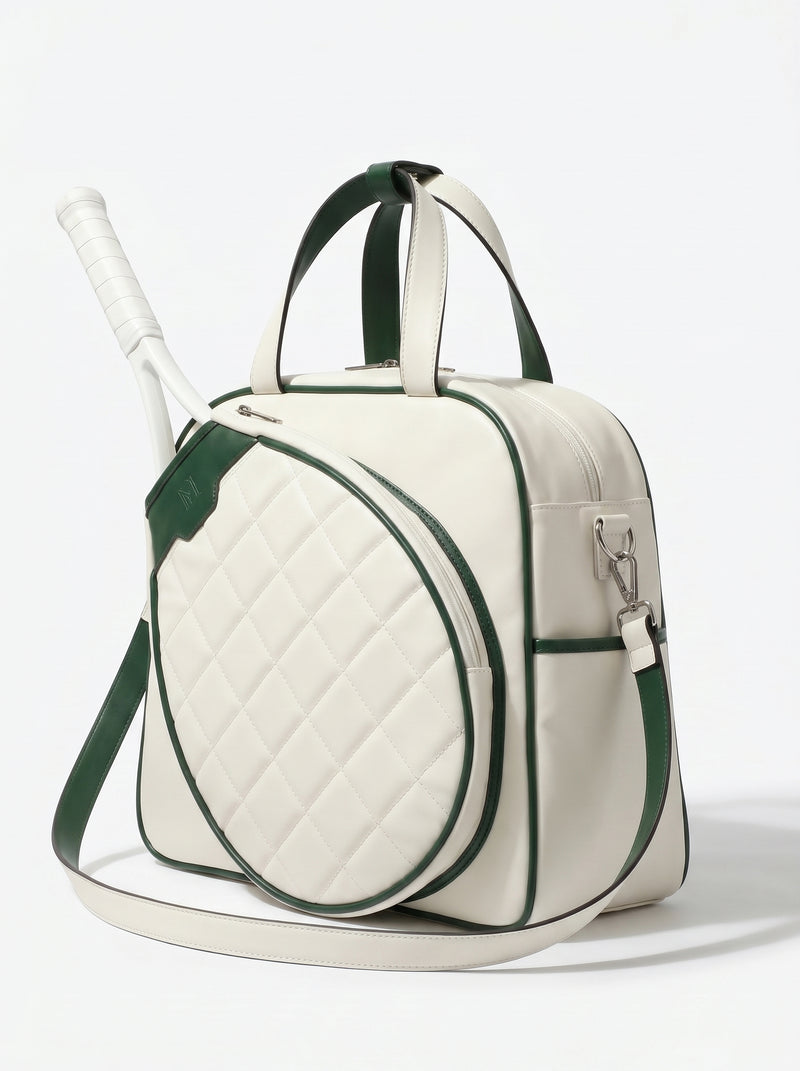
The Westmount Tennis Weekender is designed for up to two racquets in a custom exterior pocket. Its roomy side shoe compartment, secure back zipper pocket and adjustable, detachable crossbody strap bring that playing-and-spare routine into a refined everyday tote.
Use our tennis bag size guide for published measurements and the belongings that accompany your racquets. For a competition, the tournament-day planning card covers check-in, waiting and the next match. Those are separate steps from deciding on a spare.
Let your actual playing routine set the racquet count, then choose a bag that gives the arrangement a considered home. Discover the Westmount.
A Maison Muze guide. Sources and current product details checked 25 October 2026. No equipment-performance or all-items-fit test is claimed. More guides in News.